Friday, December 14, 2012

Read Alike: The Hobbit

The Hobbit: an unexpected journey, the first film in Peter Jackson's planned trilogy, opens in U.S. theaters today. The film is an adaption of J.R.R. Tolkien's novel, The Hobbit, or, There and Back Again. The book's popularity led to Tolkien's trilogy, The Lord of the Rings, which was, in turn, the source of Jackson's first popular Middle-earth trilogy.

Many of you have probably seen all or part of Jackson's film adaptions of The Lord of the Rings, and hopefully you've read the books as well. If you haven't yet, we definitely recommend picking up The Hobbit whether or not you'll be going to the theater this weekend. If you're curious about how the book became the movie, check out this interview where Peter Jackson talks about some of the decisions he made in the process of filming.

If you've already read The Hobbit a dozen times and are looking for something new, we've pulled together a few suggestions for you. Of course, it's easy to argue that most modern fantasy owes a debt to Tolkien's influence, and because this upbeat adventure novel has appeal for readers young and old, we've included titles from the youth, young adult, and adult collections! 

A Wizard of Earthsea by Ursula K Le Guin
A fantasy classic that remains popular with readers from tween to adult. Earthsea is a world dominated by the seas, and where names hold great power. The story follows Ged as he grows in his skills as a wizard from a boyhood as a goatherd to his time as a student in the wizard's school. Much like Bilbo, Ged's journey teaches him to think beyond himself to the larger threats of evil in the world.

The Lion, the Witch and the Wardrobe by C.S. Lewis
C.S. Lewis and J.R.R. Tolkien met while teaching at Oxford and formed a friendship that shaped their literary careers. Lewis and Tolkien shared a love of mythology, and that love shines through in different ways in each of their writing. Lewis' Chronicles of Narnia has adventure, a battle between good and evil, and is popular with younger readers. You can read more about Lewis and Tolkien's friendship here.

The Book of Three by Lloyd Alexander
Alexander's Prydain Chronicles have a solid appeal for younger readers, but the suspenseful adventure, the details from Welsh mythology, and a touch of humor hold up well. There's a colorful cast of characters including Taran, assistant pig-keeper, Eilonwy, runaway witch, Doli the dwarf, and, of course, Hen Wen the oracular pig. The heroes find themselves in a battle against evil that spans five books. 

Dune by Frank Herbert
Frank Herbert is best known as the creator of the Dune series, which, after his death, was carried on by his son Brian. Though the setting for Dune is vastly different from Tolkien's Middle-earth, Herbert's detailed worldbuilding, epic story, and descriptive language capture a similar appeal. Although younger readers might find be uncomfortable with some of the issues raised, adults older teens who are willing to try science fiction should give this series a try.

More for Tweens
The Wind in the Willows by Kenneth Grahame
Redwall by Brian Jacques
Gregor the Overlander by Suzanne Collins
Odd and the Frost Giants by Neil Gaiman
Small Persons with Wings by Ellen Booraem

More for Teens
The Once and Future King by T.H. White
The Tiffany Aching books by Terry Pratchett
The Golden Compass by Philip Pullman
The Dark is Rising by Susan Cooper

Adults should take a look at our Read Alike post for Robert Jordan, which has a mix of modern fantasy authors. You might also enjoy Andrew's review of The Name of the Wind by Patrick Rothfuss. I'd like to thank Andrew and Emily for their help with this post!

Did you already attend a midnight showing? Give us your movie review in the comments!

Please stop by the Recommendations Desk on the first floor, check out NoveList Plus on the library's website, or visit W. 11th & Bluff next week for more reading suggestions. Or submit a Personal Recommendations request, and we'll create a reading list just for you!

Monday, December 10, 2012

Brain on Fire: My Month of Madness by Susannah Cahalan

It began - or at least it seemed to begin - with two small bug bites. Bedbugs? Perhaps. The young Manhattan reporter, just months out of college, searched her apartment for any sign of the pest. Despite finding no trace, she searched again, eventually calling in an exterminator, who also found nothing. Unknown her, this seemingly innocuous event would mark the beginning of an illness that would eventually steal her sanity, mind and nearly her life.

Susannah Cahalan's Brain of Fire: My Month of Madness is her recollection (as much as she is able to remember) of her journey through what initially appeared to be a bad cold, to extreme personality changes, paranoia, mania and vivid auditory and visual hallucinations and seizures. It is also a harrowing journey through the health care system, as she and her parents desperately searched for a diagnosis as Cahalan slipped further and further into catatonia.

Brain on Fire is based on Cahalan's recollections during the first stages of her illness. However, as she admits, the very nature of the disease makes her memory of that time unreliable, and later, simply missing. Cahalan also relies on the recollections of her parents - who kept a shared journal to keep each other updated on their daughter's progress between visits - her boyfriend's memories and stories from her family, friends and coworkers. Cahalan also draws on her extensive medical records and interviews with the doctors and nurses who treated her, including, as Cahalan's mother remarks, "a real-life Dr. House." She also reviews recordings of her time in New York University Hospital's Advanced Monitoring Unit, offering a haunting glimpses of her deteriorating sanity, none of which Cahalan remembers.

Some of the book's most moving passages (of which there are many) are the recollections of her parents and loved ones. Cahalan's parents had divorced and remarried and her relationship with her father - a somewhat reserved and emotionally distant man - had suffered. Her parents, who had not maintained a relationship, vowed early on that their daughter would not be placed in a psychiatric ward. Her father kept a near-constant vigil at her bedside and her mother researched every possible cause of her daughter illness, searching out the best doctors with increasing desperation. The effect of Cahalan's illness - of watching their only daughter fall apart and being powerless to help - was profound. But, as Cahalan acknowledges, she would not have survived without them.

The science behind the disease Cahalan is eventually diagnosed with is highly complex and not entirely understood. Therein lies the crux of the book - the disease is so rare and difficult to diagnose, its cause so mysterious - that it baffles even the best doctors in the field. Perhaps the most sobering message of this book is, as Cahalan says, how lucky she was. To have been admitted to the right hospital at the right time and referred to the right doctors; the sheer odds against her were astronomical. How many others, she wonders, were not so lucky? How many have been confined to psychiatric wards, long-term care facilities, or have died because they were not as fortunate?

At the close of the book, nearly two years had passed since her admission to NYU Hospital. While she had returned to her job at the New York Post and had, again, moved out of her mother's home, she admits that she isn't entirely sure if her recovery is complete. After such a harrowing journey, after the insults suffered by her brain and body, was is even possible to return to the same person she had been before? Cahalan seems to accept the idea that she might never return to exactly the same person she was before, nor will her parents and boyfriend.

Brain on Fire is both a memoir and a medical thriller, an exposé of the health care system and a tribute to the men and women who work within in,  it is a warning of how fragile our minds and bodies are, and an affirmation of the strength of love and family.

~ Allison , Adult Services

Friday, December 7, 2012

Six Degrees

Usually our Friday posts include a list of books or authors with similar writing styles, characters, genres, or tones. But where's the fun in always doing the expected?

Have you ever played the six degrees of Kevin Bacon? A Madison librarian, Sarah Statz Cords, came up with a variation for those of us better at naming authors than actors. That said, we won't limit you to just books, if a movie or television show helps you connect the dots between your six items, go for it! Post your list here, or on our Facebook Page.

I'll start us off:

1) The Nine: inside the secret world of the Supreme Court by Jeffrey Toobin has been on my To Read list ever since my father, brother, and sister all told me that they loved it.


2) True Believers by Kurt Andersen is a book that I did read this year. The main character, Karen Hollander, has just turned down the opportunity to become a member of the Supreme Court because of a dark secret in her past.

3) Less of a secret was her youthful love for all things James Bond. While Karen and her friends preferred the books, today most of us are more familiar with the movies, including Judi Dench in the role of M.

4) Judi Dench's career has included a number of parts in movie adaptations, including Mrs. Fairfax in the 2011 film of Jane Eyre, my all time favorite book.

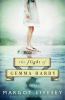
5) I can't bring myself to watch any of the movie versions of Jane Eyre, but I did read The Flight of Gemma Hardy by Margot Livesey. A retelling of Jane Eyre set in the 1950s and '60s.


6) The narrator of the audiobook for The Flight of Gemma Hardy is one of my favorites: Davina Porter. She's also the voice behind Diana Gabaldon's wonderful Outlander.


Think it's too easy? Try to find the connections between your favorite book and favorite movie (no points if your favorite movie was based off of your favorite book), have a friend pick the two titles you have to connect, or see how many lists you can make that include your favorite author.